Speculative design │ 2024

The food experience in Estonia in 2050 – What if the food visual doesn't tell the whole story?

We examined trends and attitudes toward food in the past (1998) and present (2024). We analysed where these trends might lead us. We found that one emerging trend is the use of food delivery services. We noticed how these services present information about food products, and we wanted to draw more attention to this through a potential future scenario and artefacts we created ourselves. Our future artefact was pancakes made from a mysterious powder. The goal of the project was not to create a solution to the problem, but rather to provoke people to think about their own behaviour patterns.

Supervisors

Nesli Hazal Oktay

Mert Oktay

Team

Kristin Silm

Anna-Riika Jatsa

Time

Feb 2024 – May 2024

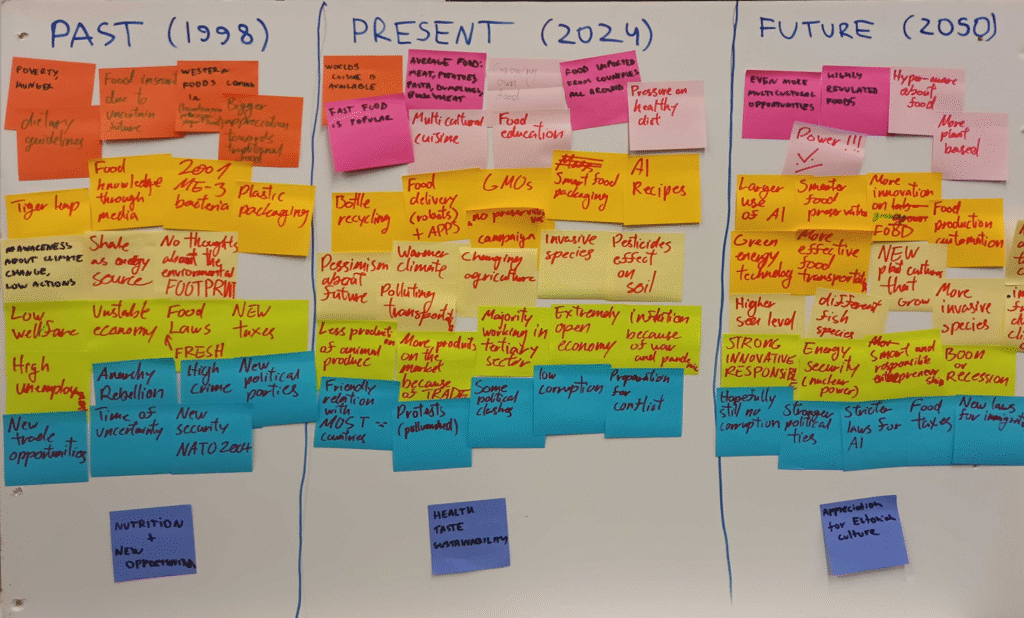
n order to imagine what people's relationship with food might be like in Estonia in 2050, we first had to understand what people's relationship with food was like 25 years ago and what it is like now. To do this, we conducted desk research and interviewed people of different ages. We also interviewed experts to find out what trends they have noticed and what might happen in the future.

Based on the information collected, we did a STEEP+V analysis, which is typically used to compare trends over different periods of time. The letters in STEEP+V stand for S = Social, T = Technological, E = Economic, E = Environmental, P = Political, and V = Values.

The main conclusions we drew from our research and analysis were:

STEEP+V:

  • In the past, insufficient measures were taken to combat global warming
  • Food delivery services are becoming increasingly popular
  • Changes taking place in agriculture
  • There will be more invasive species in the future

People's experiences and values:

  • Ingredients are important for people
  • Sustainability is important to people, but not always an option
  • Ethics and consumption are important when it comes to food
  • Food choices are also influenced by the habits of friends and loved ones
The most interesting thing to learn was that one of the most important values people have when it comes to food is its ingredients, and that food delivery services such as Bolt food and Wolt are on the rise today. This is because when ordering food through delivery services, more detailed and specific information about the ingredients may not be available. This is inevitably at odds with people's values regarding food.

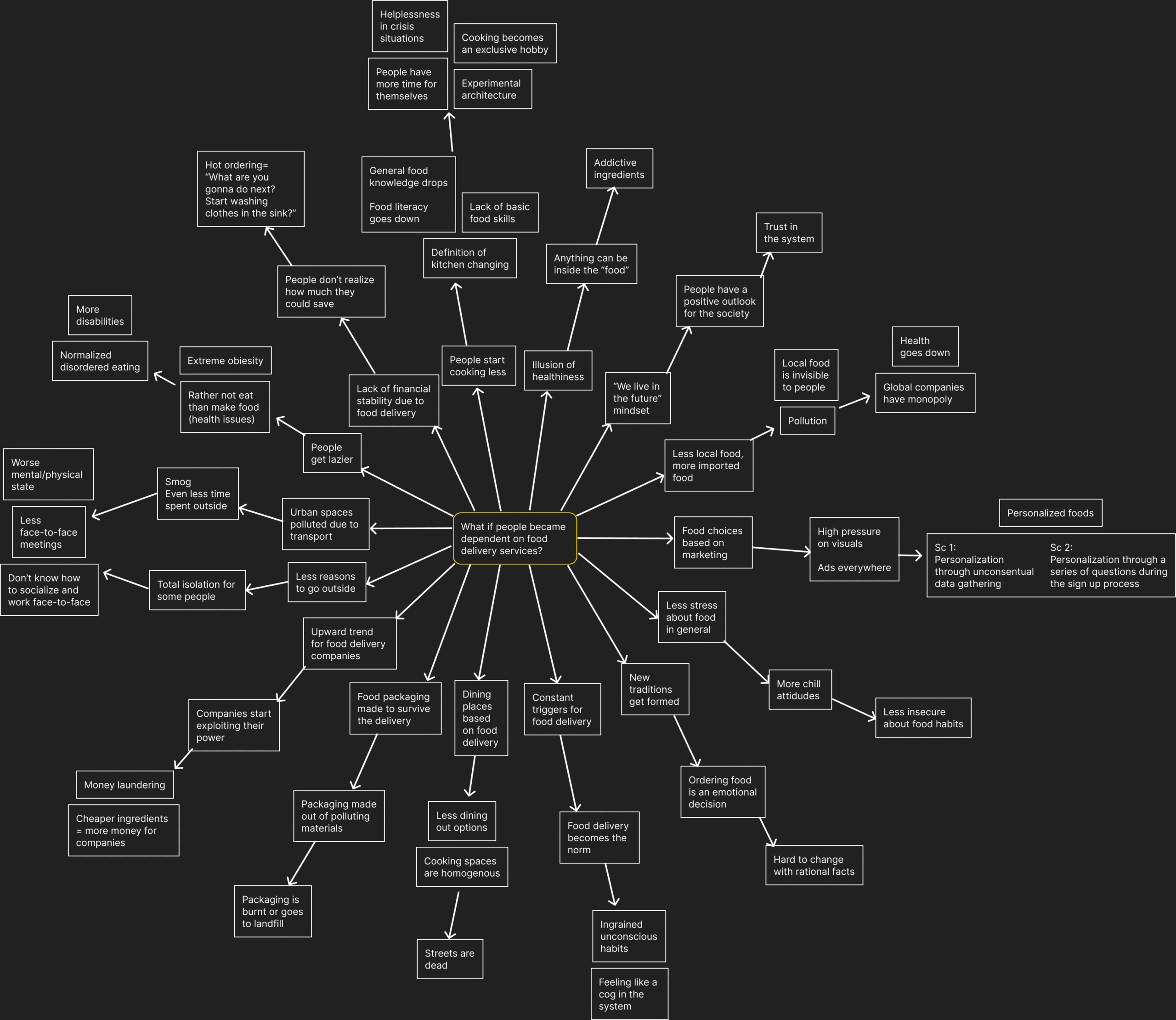
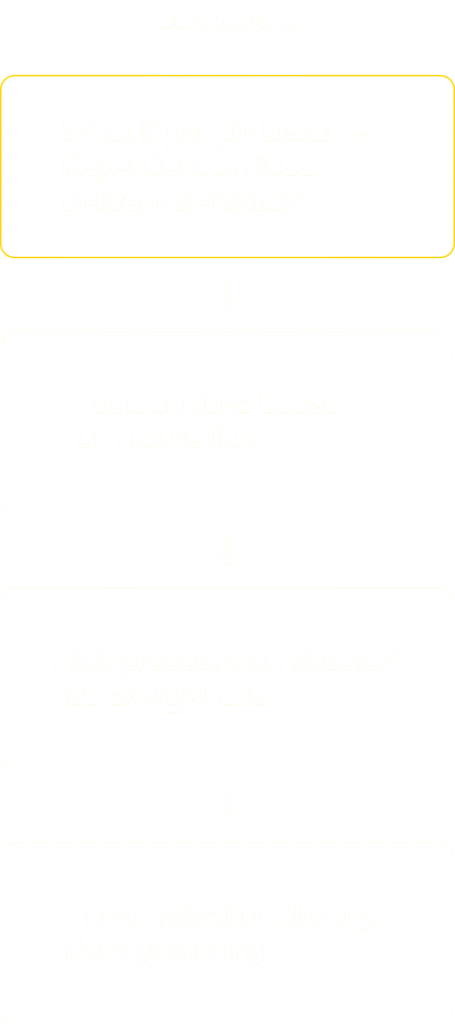
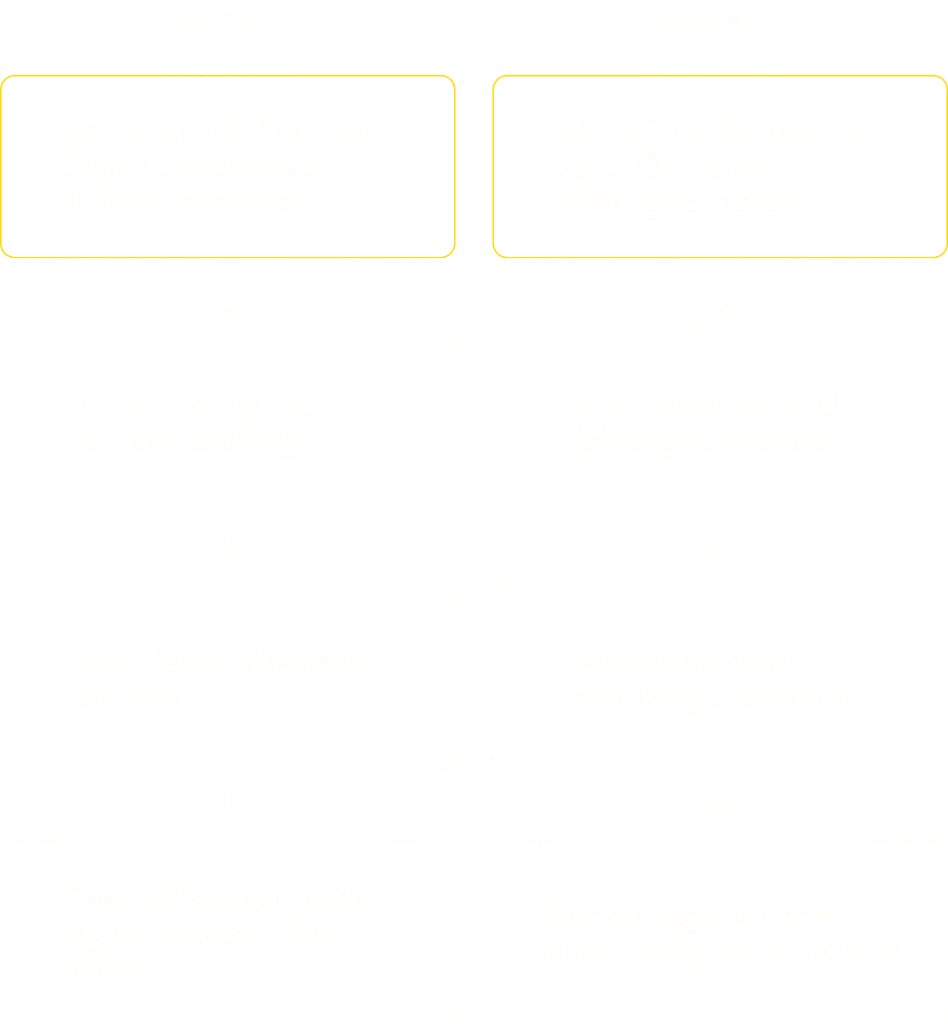
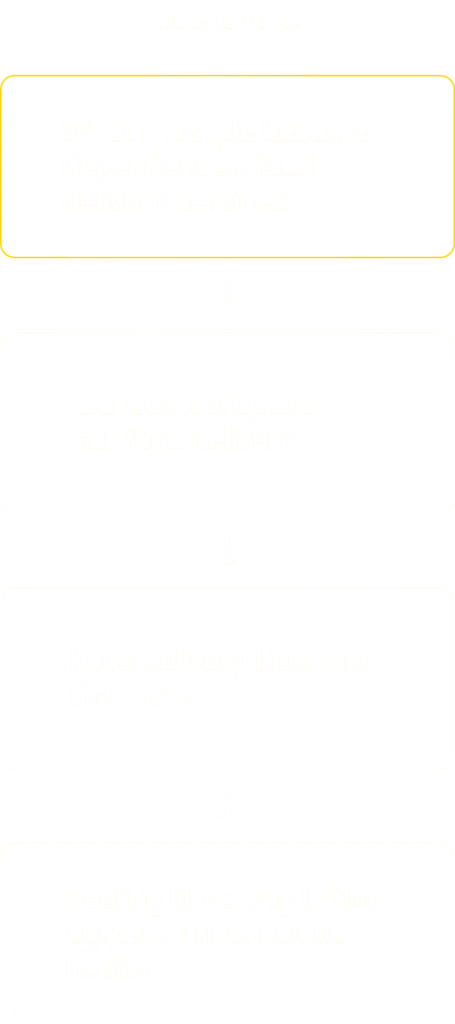
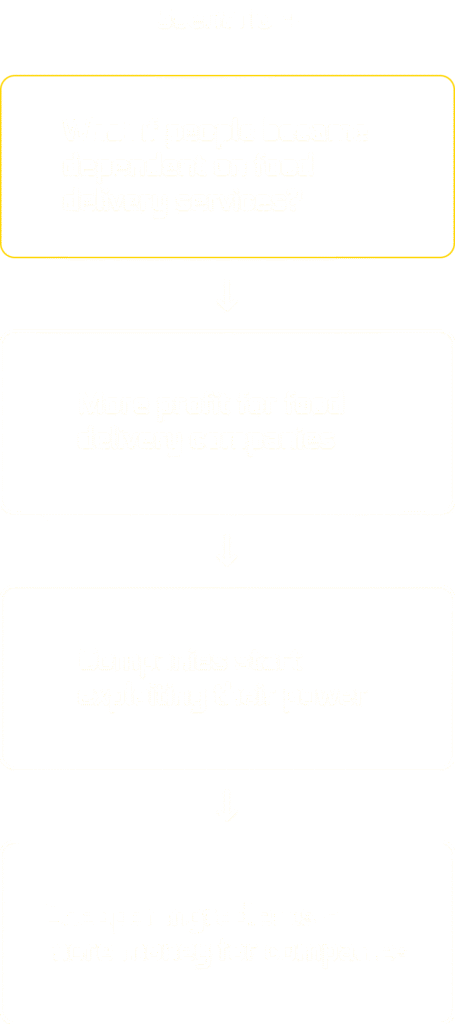
To discover the potential future of Estonian food, we created a futures wheel. This is a brainstorming method that can be used to discover the consequences of different types of changes on several levels. The central question of our wheel was "What if people became dependent on food delivery services?"

Click to enlarge.

Several scenarios emerged, but we focused on four when creating our final prediction.

These scenarios could lead to a future where it is easier to put ingredients in food that we might not want to see in our food, and we may not be specifically informed about them. Like insects, for example.

Dear reader, at this point, you may feel that this is not realistic. It does not sound like something that should be legally possible.

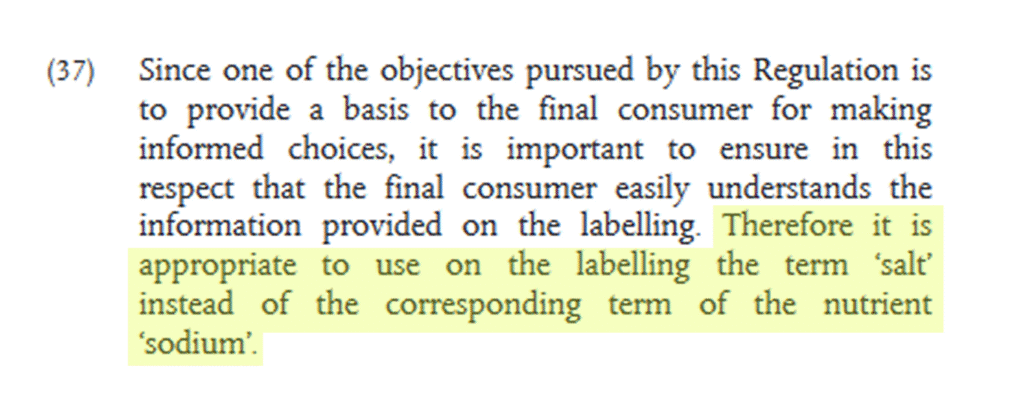
During the research phase, we reviewed the European Union's food regulations, which Estonia also follows. We found that since it uses recommended rather than mandatory language in some places, companies can take advantage of this under the right conditions. This is especially true if new ingredients emerge that are not yet fully regulated.

REGULATION (EU) No 1169/2011 OF THE EUROPEAN PARLIAMENT AND OF THE COUNCIL of 25 October 2011
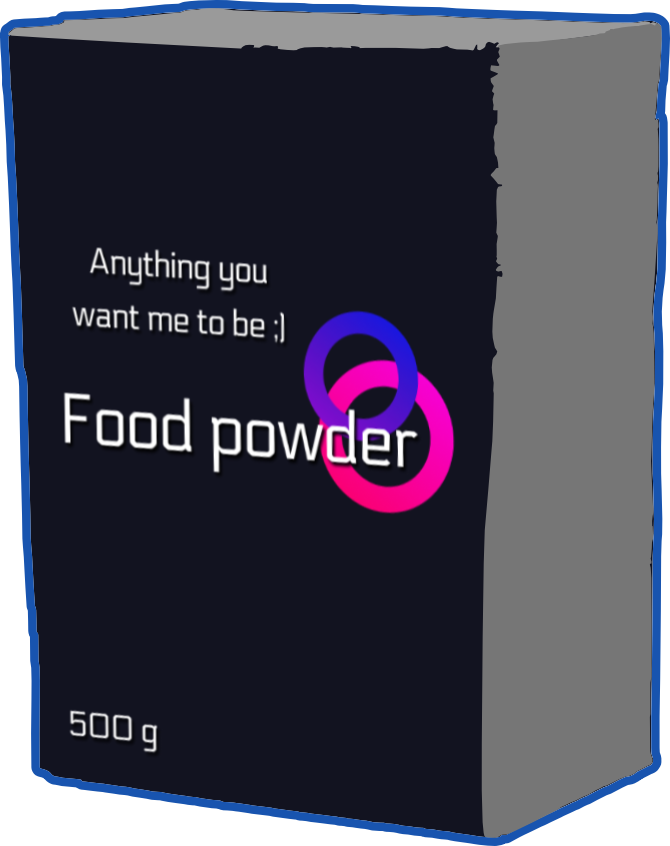
Our future scenario is that people will rely on food printers that use powder to make food. The printer can be set to produce exactly the characteristics you want. You might get a little crunch under your teeth, but that's no big deal. It's still edible and mostly just the way you want it. Right?

Packaging and printer UI design: Anna-Riika Jatsa
Camera operator and video editing: Kristin Silm

With our scenario, we wanted to raise the question: What if our comfort with visual based food decisions left us clueless about where our food really comes from?

We wanted people who saw our project to think more about their food choices and dare to investigate more closely where the ingredients in their food actually come from.

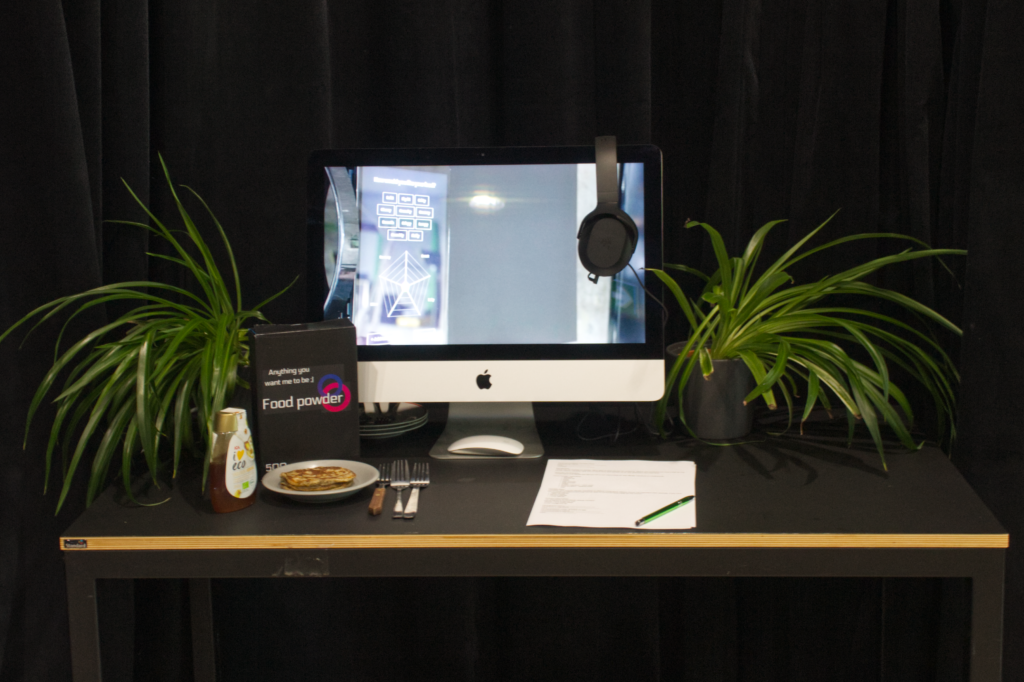
At the final presentation of the project, we brought with us an artefact from the future: pancakes that a citizen of the future had printed for themselves in the video. We let the audience try them and gave them a list of ingredients. Just in case, the pancakes were accompanied by a liability agreement from the printer powder manufacturer.

Artefact from the future: Pancakes
Ingredients: Banana, Chitin, Animal fat, Flour, Milk powder, Egg powder, Sugar, Salt, Citric acid, Baking soda
Possible risks: Latex allergy, Banana allergy, Chitin allergy, Seafood allergy

Only after the audience had tried our artefact did we reveal that chitin, listed among the ingredients, is another name for insects. More specifically, we used crickets to make these pancakes and had verified that they were truly edible and not harmful to humans. Judging by the audience's reaction, we can say that the artefact generated the desired buzz. Some people were concerned about the ingredients, while others were not bothered by them. The main and most important thing is that it sparked a discussion about food choices and food ingredients.

Previous project: