Service design │ 2024

Kodu Kutse – How to reduce loneliness among Estonian returnees

Every year, approximately 7,000 Estonians return to Estonia. These people are called returnees. The process of returning is made difficult and complicated by feelings of loneliness. Returnees feel a longing for community. To alleviate loneliness, we offer a chat room for returnees and the Kodu Kutse podcast.

Supervisors

Karolina Lehtma

Nursultan Rand

Team

Kristin Silm

Elis-Christina Kuuse

Melonia Prikker

Malin Melzer

Cooperation partner

Integration Foundation

Time

Sept 2024 – Dec 2024

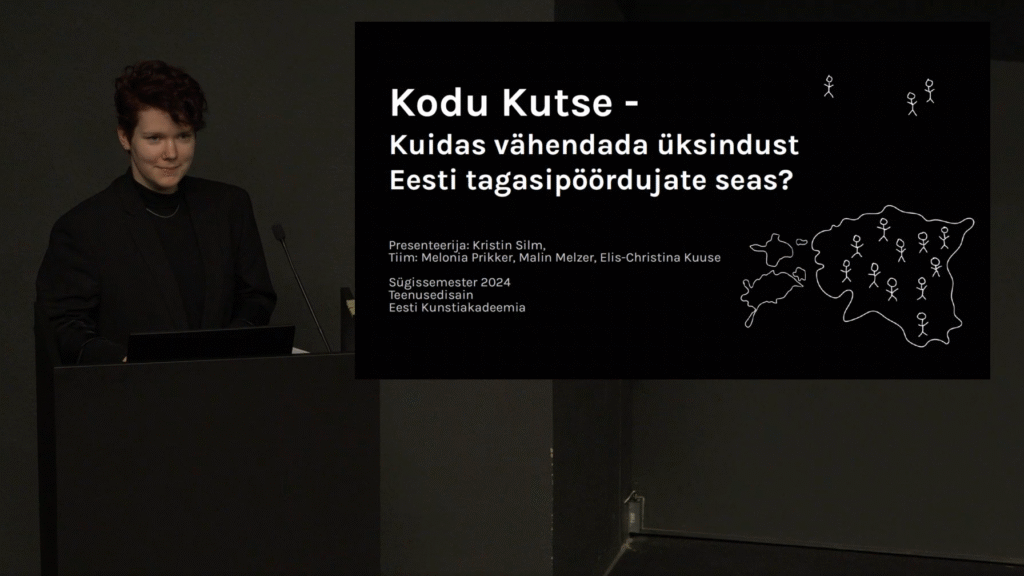
Me presenting the project at EKA Design Showcase 2025

To find answers, we conducted 11 semi-structured interviews with people who had returned to Estonia in the last 3-2 years or were planning to move back to Estonia during the research period. Our interviewees had blue-collar backgrounds. We also conducted secondary research and netnography to obtain additional information about returning.

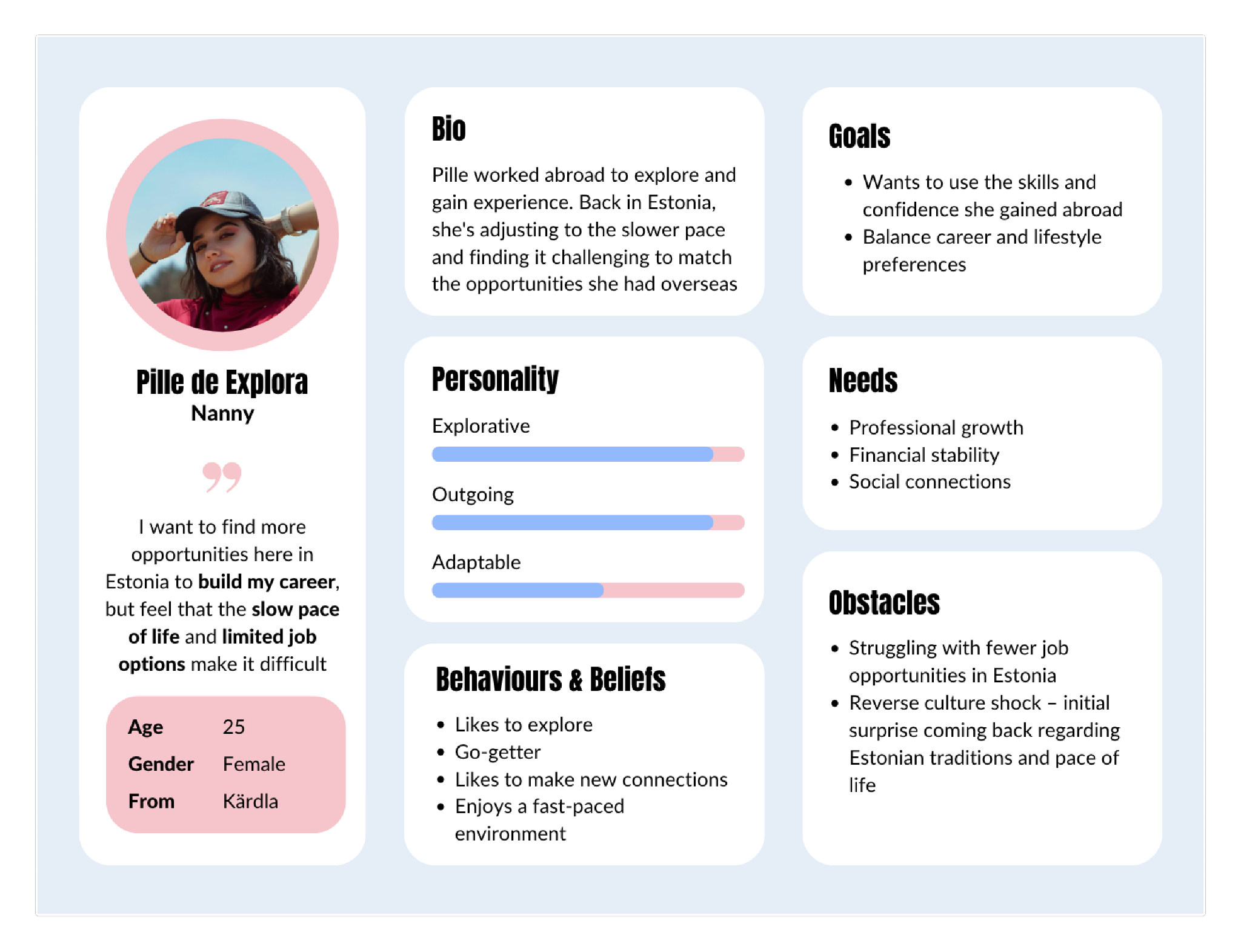
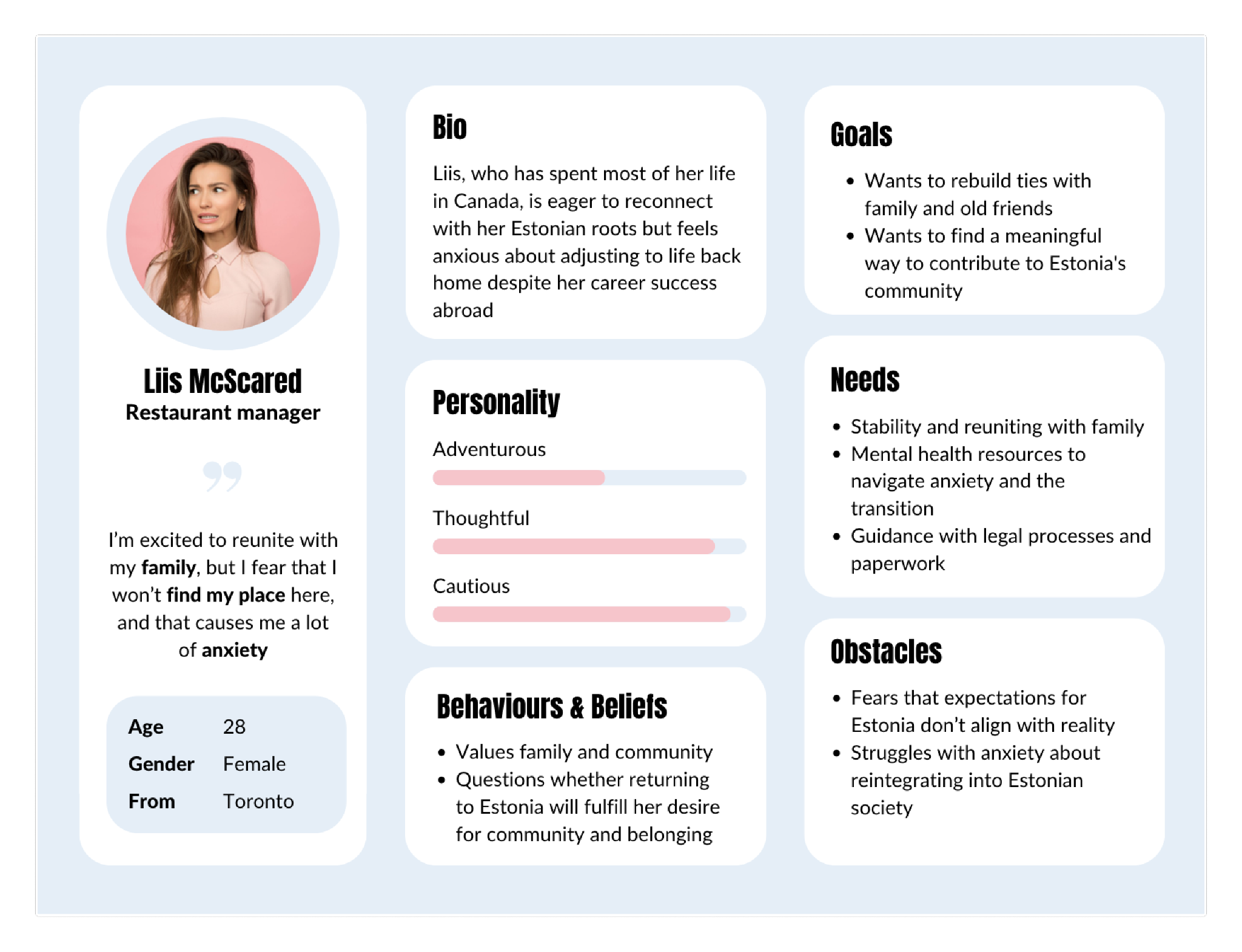
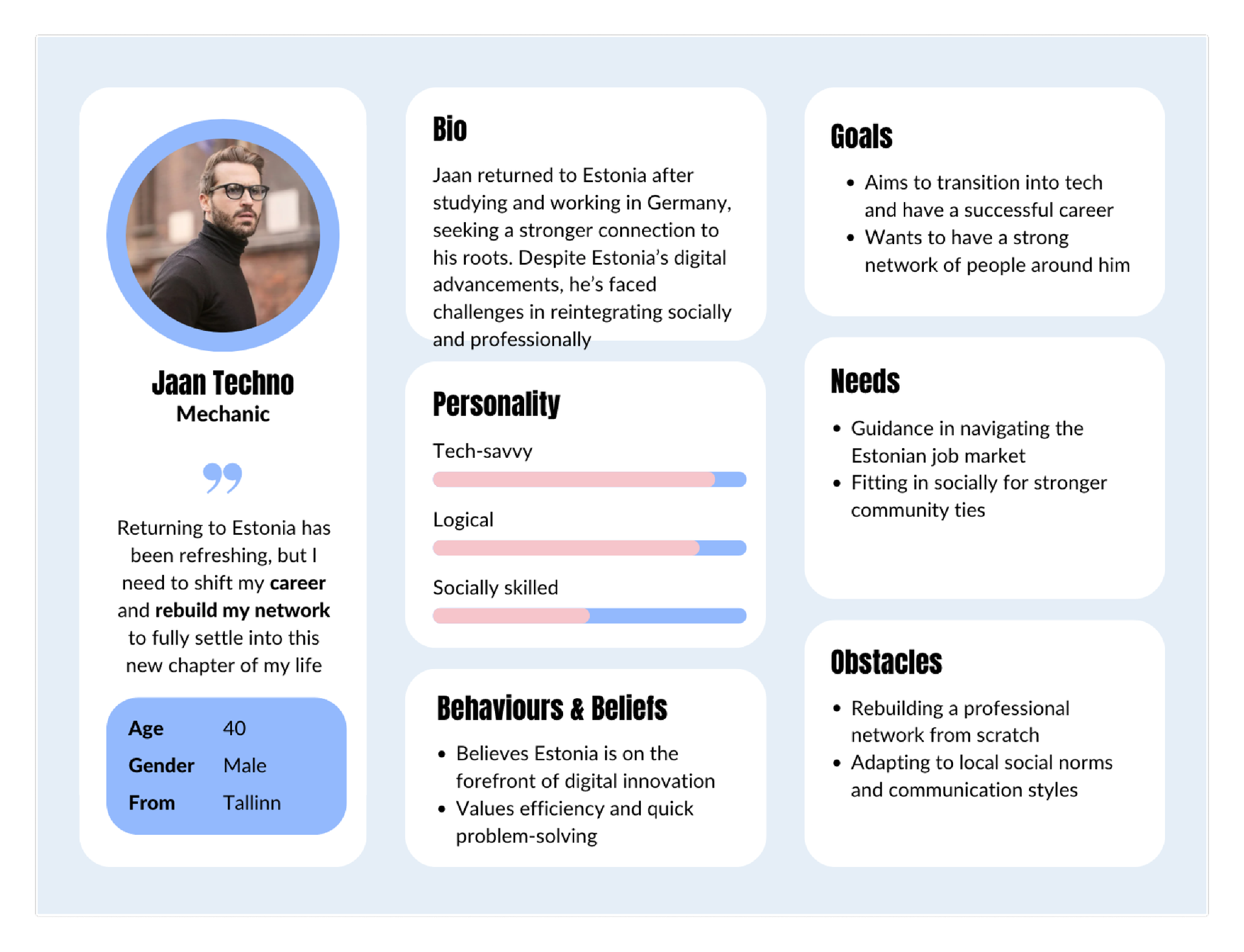
As a result of the research, we created personas and mapped the user journey based on Pille's persona. We also compiled a service map to analyze how the user journey we created and INSA's existing service interconnect. We identified finding information and creating documents as problem areas.

User journey. Click to enlarge.
Service map. Click to enlarge.
Click to enlarge.
Click to enlarge.
Click to enlarge.

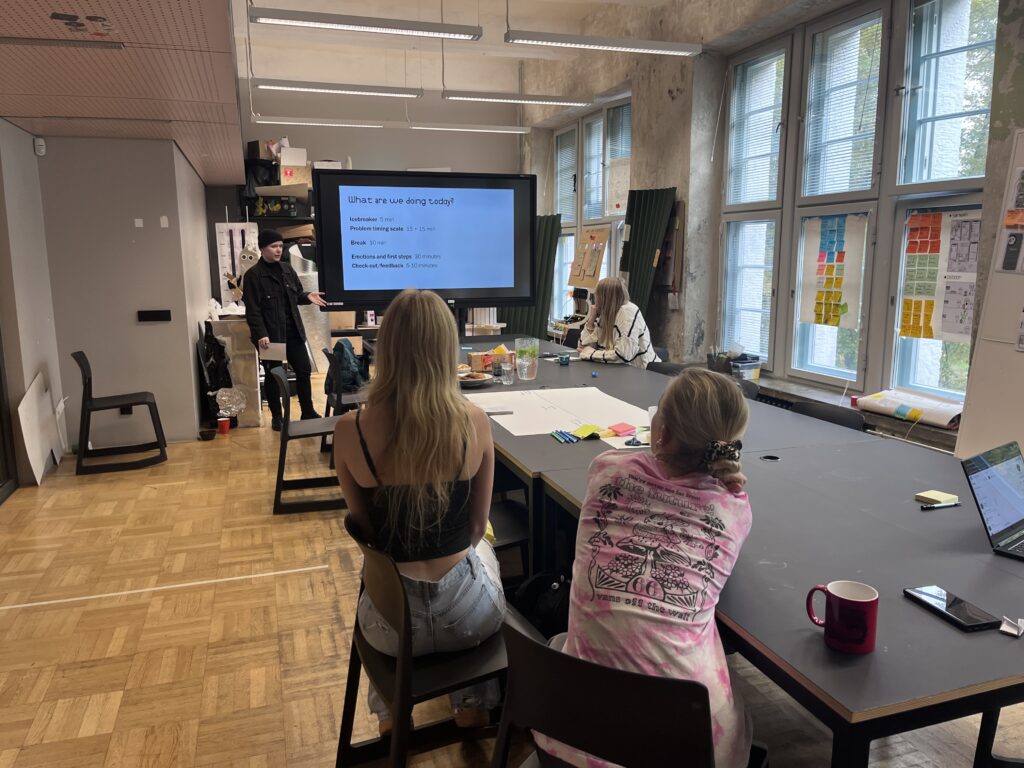
We held 2 workshops to narrow down the focus of our project. The first workshop was smaller, with two returnees and three of our team members playing the roles of the three personas. The workshop brought to our attention that the biggest impact on the entire journey is not the problem of finding information and filling out documents, but rather the feeling of loneliness and isolation.

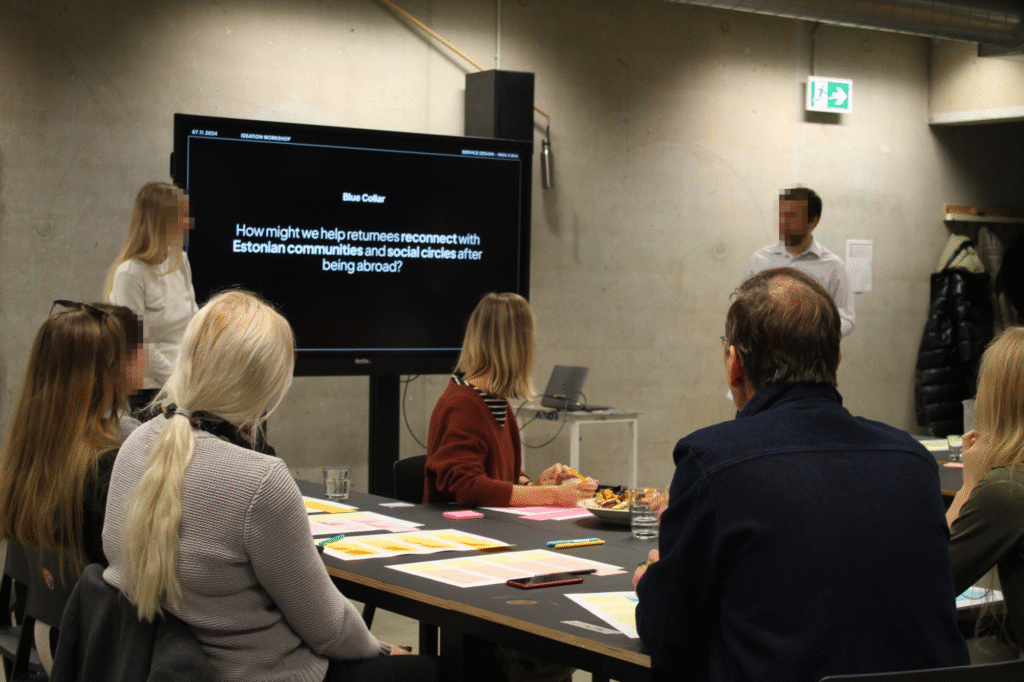
The second workshop involved more returnees and other teams participating in the project. The aim was to brainstorm potential solutions together with members of the target group. The thoughts and ideas shared in the workshop confirmed that there is a desire for some kind of social solution.

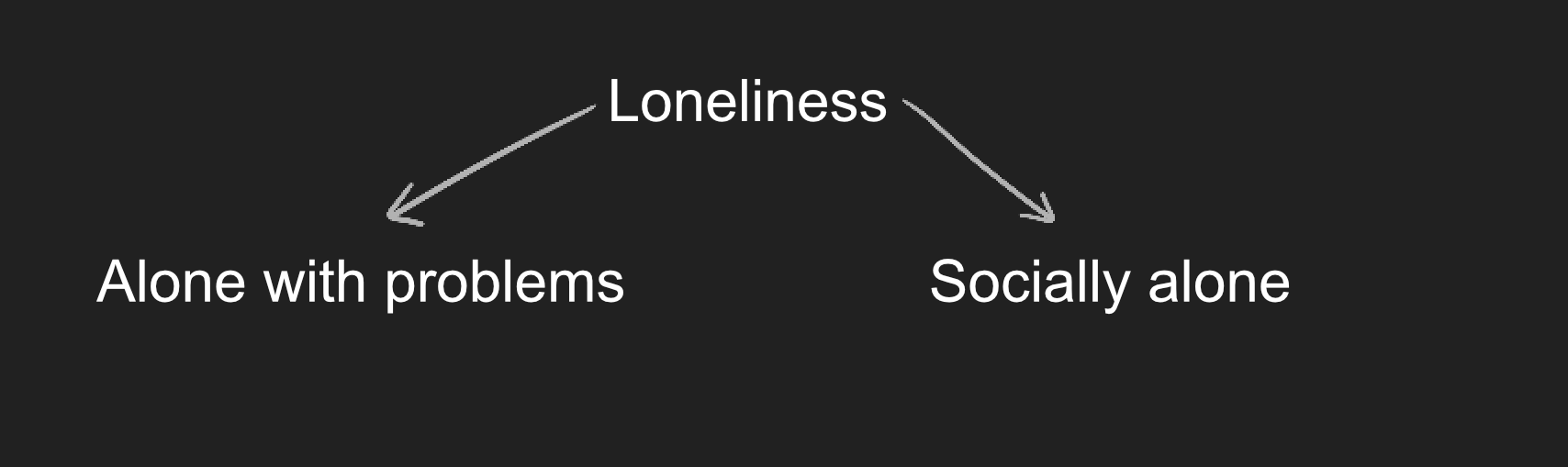
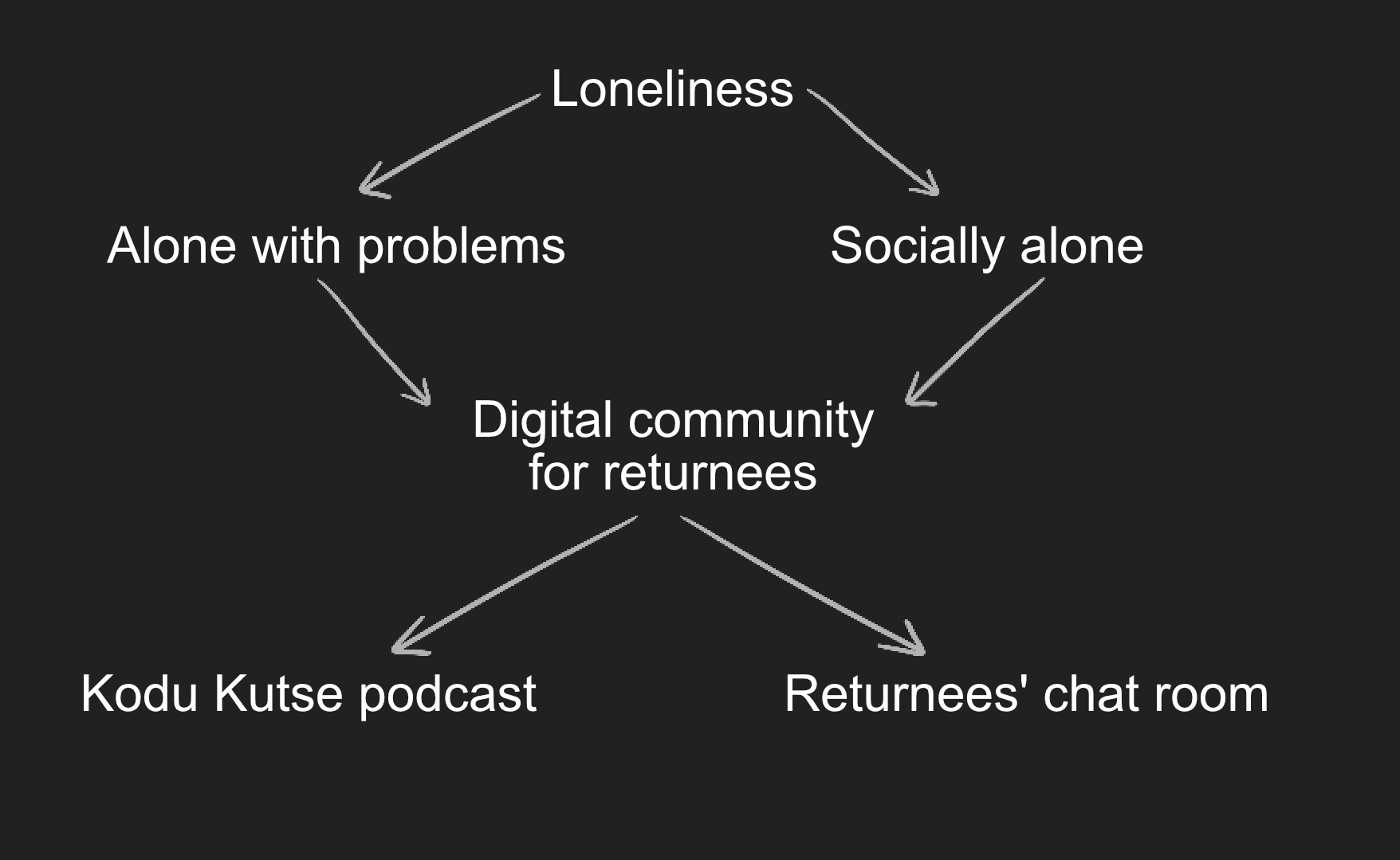
As a result of our research, we discovered that one of the biggest obstacles to returning is loneliness, which takes two forms. One is being alone with problems, and the other is loneliness as socially alone.

Being alone with problems means that returnees feel as if they are the first to embark on this difficult journey.

“I would like to get in touch with more people who are in the same situation as me. Maybe I don't know how to find them or haven't looked hard enough.”

Social isolation stems from the fact that when returnees arrive back in Estonia, it is difficult to find people who share similar experiences. It is difficult to find friends, as many already have their own circles of friends.

“The hardest part about returning was that I had many Estonian friends, but old friends have their own circles, and it was difficult that I had no one to talk to or meet up with. I had to rebuild my circle of friends.”

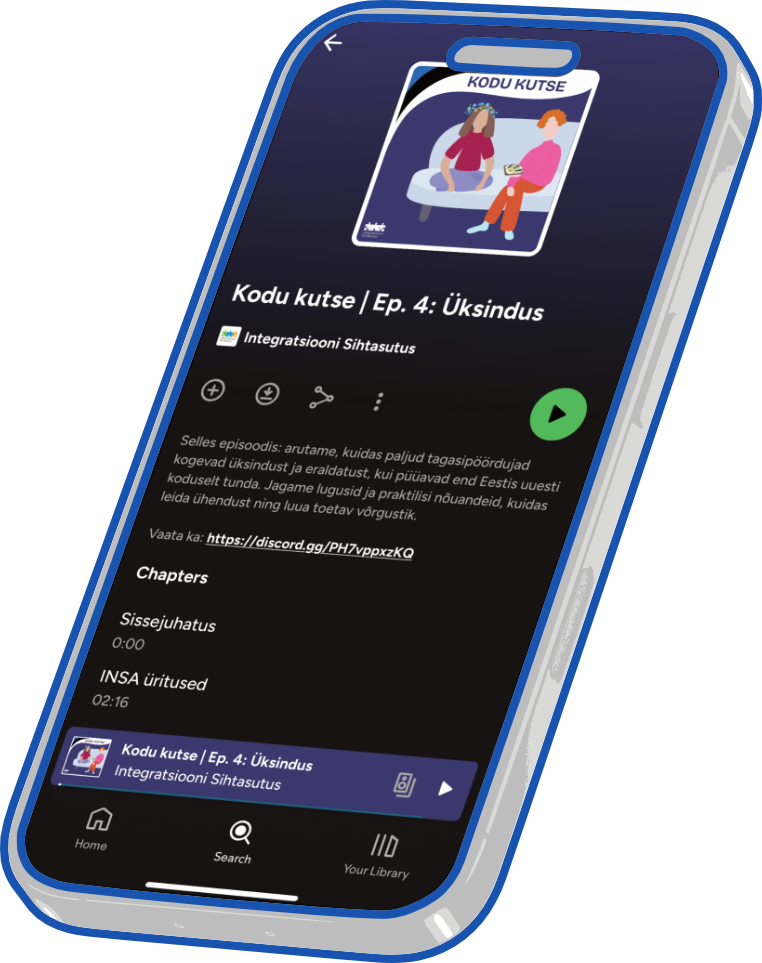
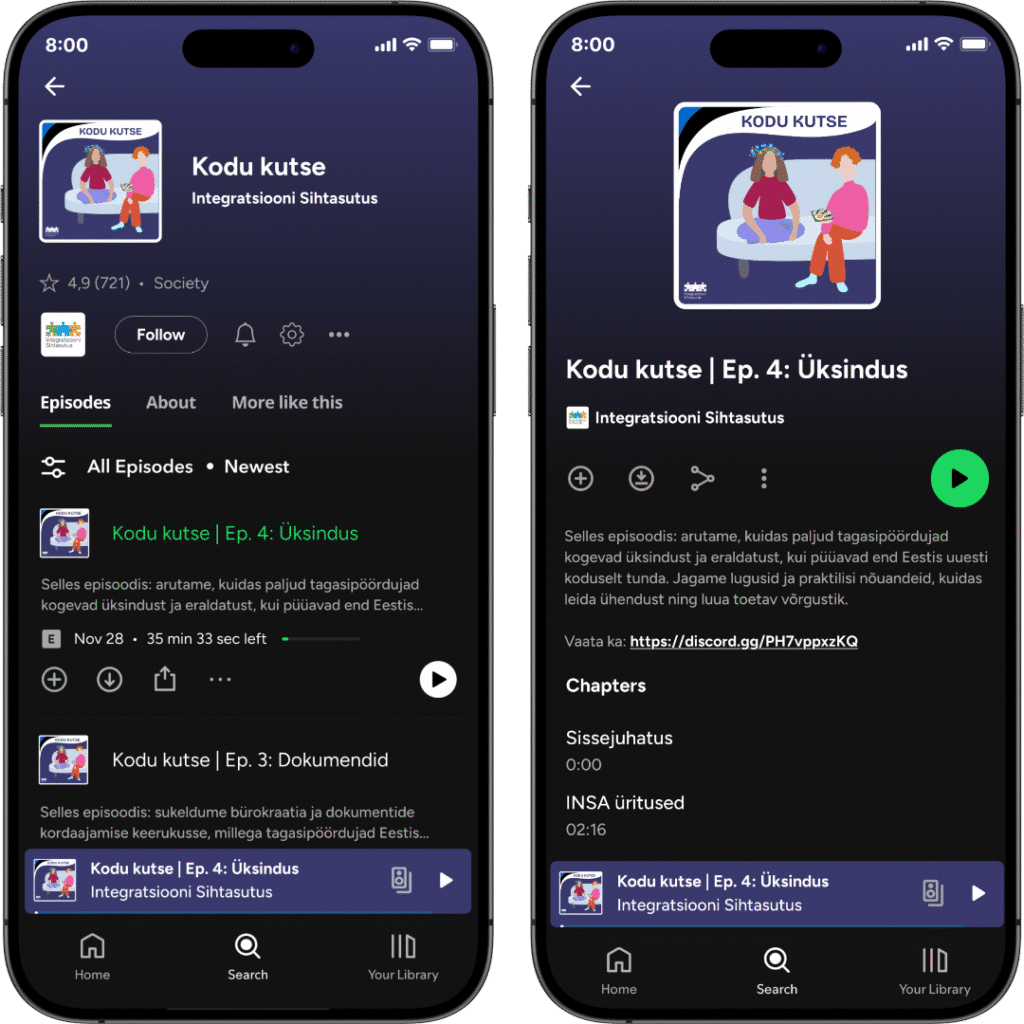
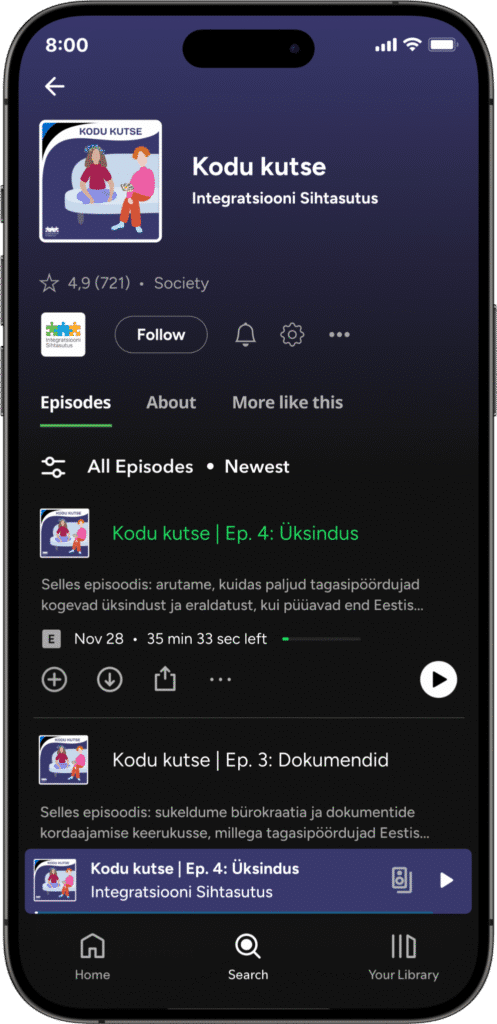
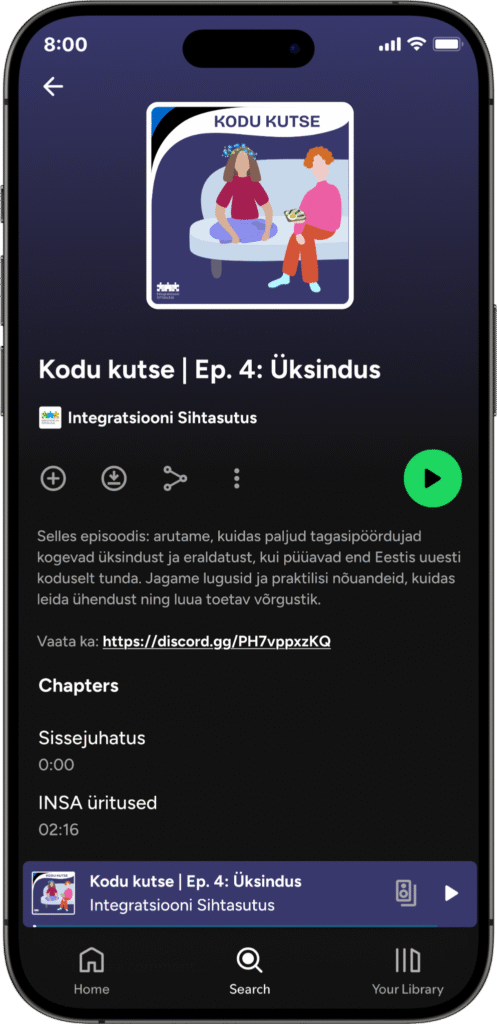
To tackle loneliness, we offer a solution in the form of a digital community for returnees, which consists of two parts. One is the Kodu Kutse podcast and the other is a chat room for returnees on Discord.

The podcast shares stories of returnees, how others solved their problems, and what made their journey exciting. People can send in their own stories, which are then read aloud by the two hosts, who are also returnees. They also share their thoughts and ideas to create a more open environment.

Each episode has a common theme that overlaps with the topics discussed at meetings for returnees that are already taking place. The aim of Kodu Kutse is to show that returnees are not alone with their problems.

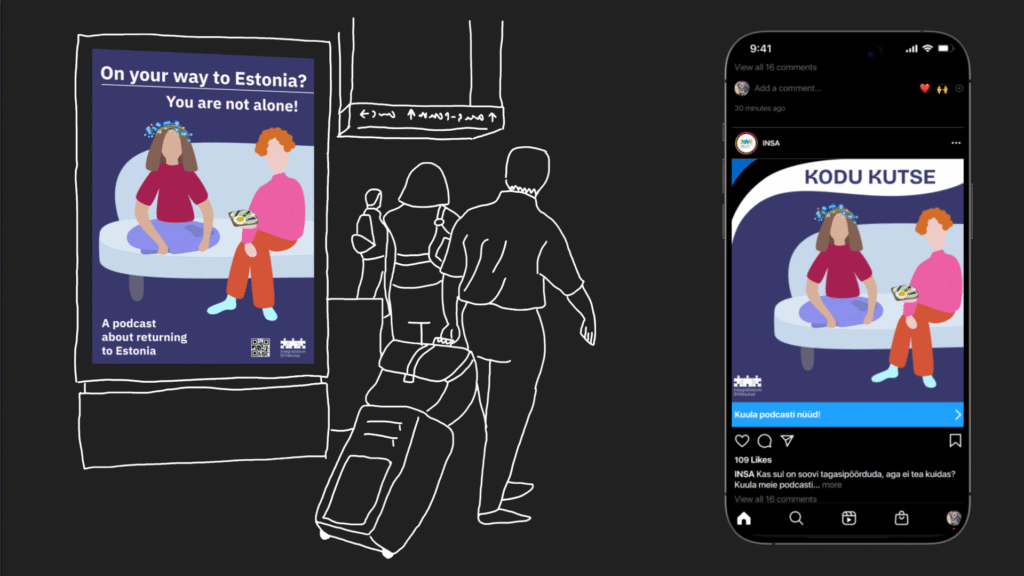
The first encounter with the podcast would be advertisements at airports, for example when visiting family in Estonia, and advertisements on social media.

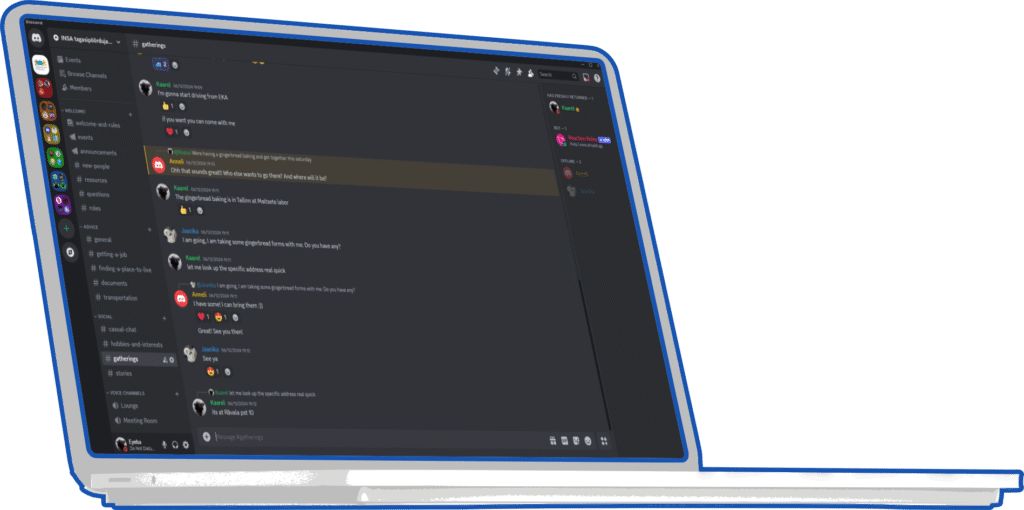
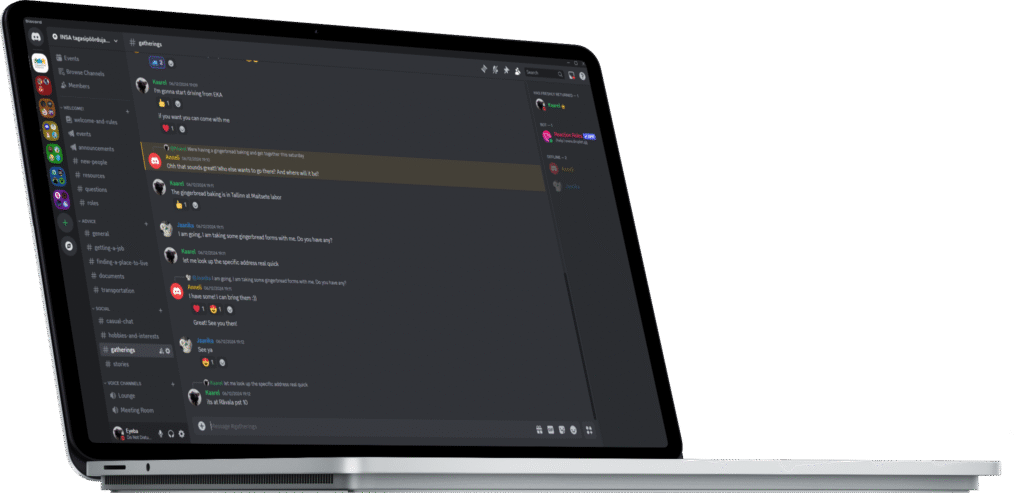
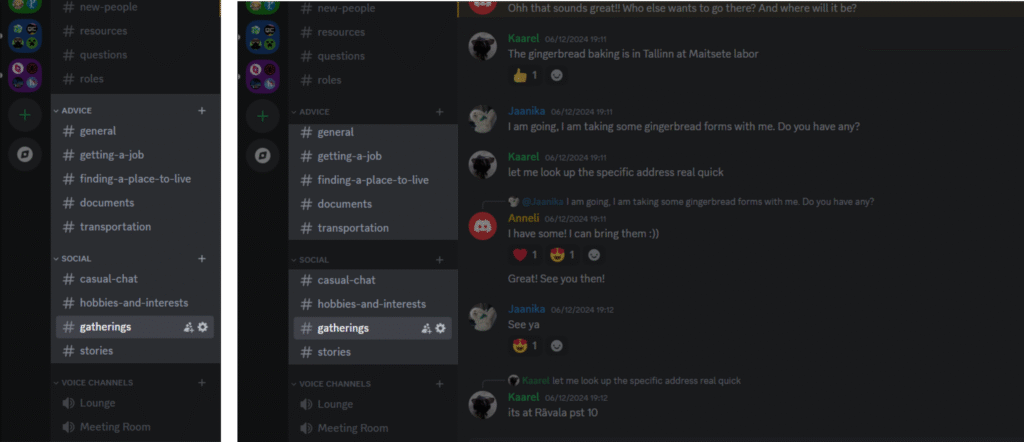
The second part of the digital community for returnees is the returnees' chat room. The chat room would be set up on Discord, as it is an existing platform and it is easy to customize the chat room according to needs.

The chat room is divided into categories, which are in turn divided into channels. For example, a returnee can ask for advice on transportation in the advice category using the transportation channel. Or if they just want to chat with others, they can do so in the social category.

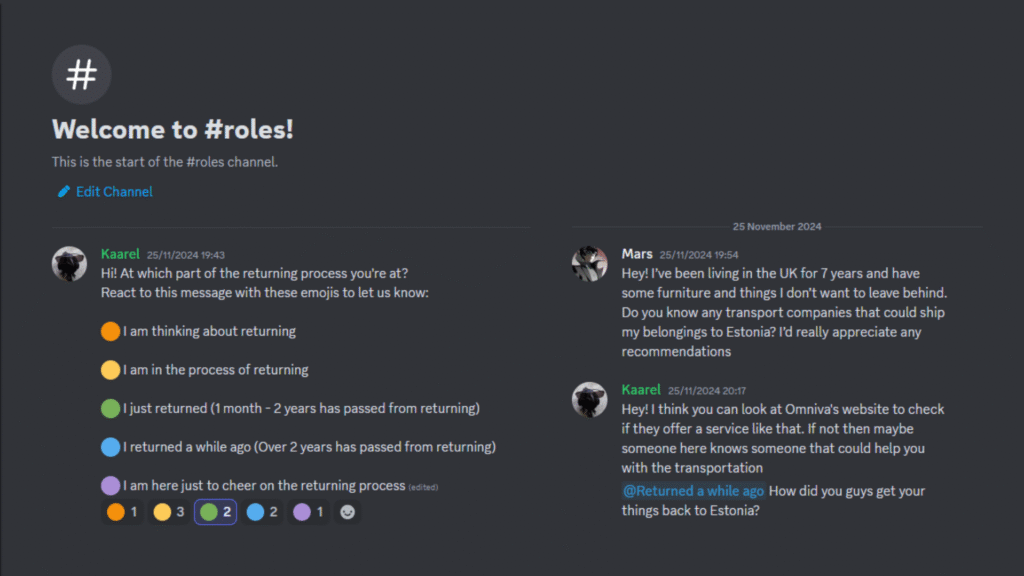
In the chat room, members can be assigned roles according to the stage they are at in their journey back to Estonia.

Roles are assigned simply by responding to a message with the corresponding color. Roles can be used to direct messages to a specific target group. For example, new returnees can ask previous returnees for advice.

The returnee can use these tools at every stage. Through these tools, they have direct contact with the existing community, which can support them every step of the way.

We also asked returnees for feedback on our ideas, and they were positive about the solutions. Some were already interested in when the solution would actually be implemented.

Previous project:

Next project: